
What Is Kindergarten Readiness

📖 Table of Contents
- What Kindergarten Readiness Really Means
- The Role of Social Skills in Kindergarten Readiness
- The Importance of Emotional Regulation
- The Role of Cognitive Development in Kindergarten Readiness
- The Role of Language and Communication Skills
- The Importance of Fine Motor Skills
- The Role of Play in Kindergarten Readiness
- Make It Your Way
- Frequently Asked Questions
I still remember the first day my daughter walked into kindergarten, clutching a crumpled paper bag of crayons and a backpack that looked like it had been stuffed by a raccoon. She looked around the room with wide eyes, and I realized that while I had spent months preparing her for this moment, I had no idea what kindergarten readiness truly meant. It wasn’t just about knowing the alphabet or counting to 20—it was about being ready to listen, to follow directions. To sit still for 15 minutes without melting into a puddle of giggles and frustration. That day, I learned that kindergarten readiness is about more than academic skills; it's about emotional, social, and cognitive development that lays the groundwork for a child’s entire educational journey.
As a parent, I had read countless articles about kindergarten readiness. Most of them were vague, filled with generic advice like 'play more' or 'read every day.' I needed something concrete, something that could help me understand what I was actually supposed to be doing. I started to notice patterns in my daughter’s behavior: when she could sit through storytime without fidgeting, when she could take turns in a game without throwing a tantrum. When she could recognize her name on a sign. These were the real indicators of kindergarten readiness. It wasn’t about being perfect; it was about being ready to learn in a structured, social environment.[1]
Over the next few months, I began to track her progress. I found that she could follow two-step instructions, like 'Get your shoes and put them by the door.' She could match shapes and colors, and she could count to 10 with help. These were the milestones that told me she was on the right path. But I also saw that she struggled with frustration when things didn’t go her way, and she had a hard time waiting her turn. These were the areas where I needed to focus more. Kindergarten readiness isn’t a single checkbox—it’s a collection of skills that develop over time, and it’s something I had to nurture with intention and consistency.[2]
Why You'll Love This Guide to Kindergarten Readiness
- It gives you clear, actionable steps to support your child’s development.
- It includes real-life examples and personal experiences to help you relate.
- It provides a checklist of skills to track your child’s progress over time.
- It helps you identify when your child is ready for kindergarten and when they might need more support.
What Kindergarten Readiness Really Means
As of October 2026, Kindergarten readiness isn’t about being the smartest or the most well-behaved child—it’s about being ready to learn, collaborate, and follow rules in a group setting. I noticed that my daughter could sit still for about 10 minutes during storytime, which was a big step. But she still needed help when it came to waiting her turn or taking feedback without getting upset. These were the skills that needed attention, and they were just as important as knowing the alphabet or counting.[3]
I started tracking her progress in a journal, noting when she could follow two-step instructions or when she could recognize her name. These little victories added up, and I began to see a pattern in her development. She was ready for kindergarten in some areas but still needed support in others. This realization helped me shift my focus from trying to make her perfect to helping her grow in the areas that mattered most for school.
By the time we started kindergarten, I had a much better understanding of what kindergarten readiness really meant. It wasn’t about being ahead of the curve—it was about being prepared to engage with others, follow directions, and take part in learning activities. These skills formed the foundation of her early education, and they were just as important as any academic knowledge she had gained.
Keep a journal to note small milestones, like following instructions or recognizing your child's name. This helps you see their growth over time and identify areas that need more support.
Part of our Kindergarten worksheets progress assessment guide.
The Role of Social Skills in Kindergarten Readiness
One of the biggest hurdles my daughter faced was learning to take turns during play. She had a hard time waiting her turn in games or sharing toys with others. I realized that without these skills, she would struggle to make friends and collaborate with her classmates. I started incorporating more group activities into our daily routine, like taking turns passing a ball or playing board games that required cooperation.
Over time, I saw a noticeable change in her behavior. She began to understand the importance of taking turns, and she started to ask for help when she was confused instead of getting upset. These small changes were a sign that she was developing the social skills necessary for kindergarten success. I could see that she was growing into a more patient and cooperative child.
By the time we started kindergarten, she was able to sit with a group of peers and take part in activities without being disruptive. It wasn’t perfect, but it was a huge step forward. I knew that these social skills would help her form friendships and work with others in a classroom environment, which was just as important as any academic skill she had learned.
Social skills are the glue that holds a classroom together.
Related: How to kindergarten worksheets progress
The Importance of Emotional Regulation
I quickly learned that emotional regulation was one of the most important skills my daughter needed to develop. She would often get frustrated during activities and throw a tantrum if things didn’t go her way. This made it difficult for her to focus and learn, and I realized that without the ability to manage her emotions, she would struggle in a classroom setting.
To help her, I started incorporating mindfulness activities into our routine. We practiced deep breathing together, and we talked about how to express her feelings in words instead of actions. It wasn’t an instant fix, but over time, I saw a difference in her behavior. She became more aware of her emotions and learned how to calm herself when she was upset.
By the time we started kindergarten, she was able to manage her frustration better. She could sit through an activity, even if it was difficult, and she could ask for help when she needed it. These skills were essential for her success in school, and they helped her build the resilience she needed to face new challenges.
Use mindfulness techniques like deep breathing or talking about feelings to help your child manage frustration and stay calm. This builds emotional resilience that will support them in school.
“I still remember the first day my daughter walked into kindergarten, clutching a crumpled paper bag of crayons and a backpack that looked like it…”— Kinderpractice editors
Related: Kindergarten worksheets progress assessment mistakes to avoid
The Role of Cognitive Development in Kindergarten Readiness

I noticed that my daughter had a short attention span, which made it hard for her to focus on activities for long periods of time. This was a challenge for her in kindergarten, where she needed to sit and listen for extended periods. To help her, I started incorporating activities that required her to follow instructions and solve simple problems.
We played memory games, where she had to remember the location of objects, and we worked on puzzles that required her to think through solutions. Over time, I saw that her ability to focus improved, and she became better at following instructions and solving problems. These cognitive skills were essential for kindergarten success.
By the time we started kindergarten, she was able to sit through storytime and follow simple instructions. These cognitive skills helped her engage with learning activities and build the foundation for more complex thinking in the future.
Related: Kindergarten worksheets progress checklist
The Role of Language and Communication Skills
I quickly realized that my daughter’s language skills needed more development. She had a small vocabulary and often struggled to express her needs clearly. This made it difficult for her to follow instructions or participate in class discussions. To help her, I started reading to her every day and encouraging her to talk about what she saw in the pictures.
We also practiced asking questions and using full sentences to express her thoughts. Over time, I saw that her vocabulary expanded, and she became more confident in communicating with others. These language skills were crucial for her success in kindergarten, where she needed to understand instructions and participate in group activities.
By the time we started kindergarten, she was able to follow directions and express her needs clearly. This helped her interact with her peers and teachers, and it supported her learning in the classroom. Strong language skills were a key factor in her kindergarten readiness.
Related: Kindergarten worksheets progress guide
The Importance of Fine Motor Skills
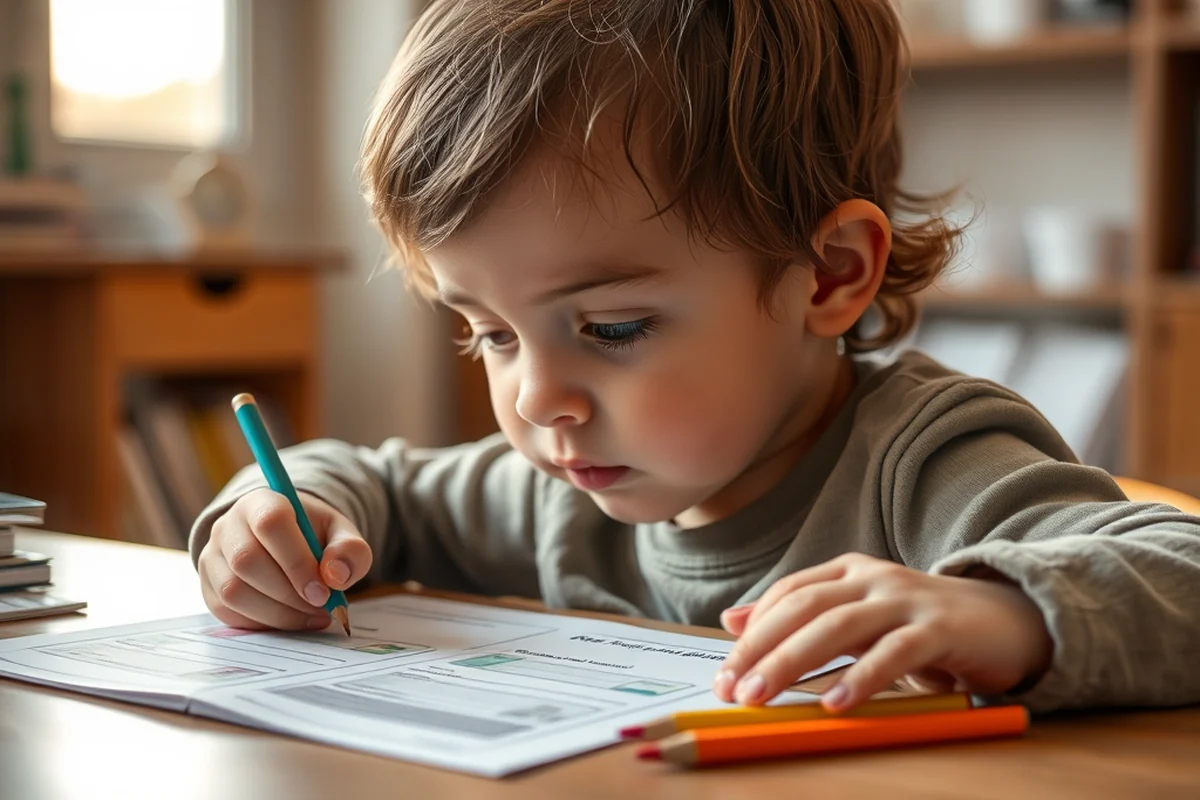
I noticed that my daughter had difficulty holding a pencil and writing her name. This made it hard for her to participate in activities that required fine motor skills. To help her, I started incorporating activities like cutting with scissors, using tongs to pick up small objects, and playing with playdough to build her hand strength.
Over time, I saw that her fine motor skills improved. She became better at using a pencil and could write her name with more confidence. These skills were essential for kindergarten, where she needed to complete writing tasks and participate in other classroom activities.
By the time we started kindergarten, she was able to write her name and hold a pencil properly. These fine motor skills supported her learning and helped her engage with classroom activities more effectively.
Fine motor skills are the building blocks of writing and other classroom tasks.
Related: Kindergarten worksheets assessment checklist
The Role of Play in Kindergarten Readiness
I realized that play was one of the most important ways my daughter learned. Through imaginative play, she practiced social skills, problem-solving, and emotional regulation. We played pretend games, built forts with blankets, and acted out stories together. These activities helped her learn how to interact with others and think creatively.
Play also helped her develop cognitive skills, like counting and recognizing shapes. We played games that required her to solve problems and think through solutions. These activities were a natural way for her to learn and develop essential skills for kindergarten.
By the time we started kindergarten, she had developed a wide range of skills through play. She was able to interact with others, think creatively, and solve problems. These skills were essential for her success in school and helped her adjust to the classroom environment.
📋 Kindergarten Readiness Checklist
A printable checklist to help parents track their child's progress in social, emotional, and cognitive skills.
📖 Kindergarten Readiness Journal
A journal for parents to track their child's development and note milestones in readiness for kindergarten.
🧩 Kindergarten Readiness Activities
A collection of hands-on activities that help children develop social, emotional, and cognitive skills in preparation for kindergarten.
📘 Kindergarten Readiness Guide
A comprehensive guide for parents that explains what kindergarten readiness means and how to support their child's development.
🎲 Kindergarten Readiness Game
A fun, interactive game that helps children practice social, emotional, and cognitive skills in a playful way.
| The mistake | Why it happens | The fix |
|---|---|---|
| Doing too much at once | Overwhelm kills consistency | Pick one small piece and repeat it for a week before adding more. |
| Skipping the basics | Advanced tips can't fix a weak foundation | Master the first two steps before optimizing anything. |
What Is Kindergarten Readiness
Common Questions
What are the key skills my child should have before starting kindergarten?
How can I help my child develop social skills for kindergarten?
What are some ways to support my child’s emotional regulation?
How important are fine motor skills for kindergarten readiness?
References
- Trends in Parents' Expectations and Families' School Experience (academicworks.cuny.edu)
- State and Selected Teachers' Use of Kindergarten Readiness ... - GAO (gao.gov)
- The Powerful Role of Play in Early Education (cde.ca.gov)
Cite this guide
Kinderpractice (2026). What Is Kindergarten Readiness. https://kinderpractice.com/what-is-kindergarten-readiness/
Feel free to cite or share this guide.