
The Sight Words Worksheet
📖 Table of Contents
- What is a Sight Words Worksheet and Why Does It Work?
- How to Get Started with a Sight Words Worksheet
- How to Make a Sight Words Worksheet More Engaging
- How to Track Progress with a Sight Words Worksheet
- Why Sight Words Are Important for Early Literacy
- How to Create Your Own Sight Words Worksheet
- How to Use a Sight Words Worksheet with a Group of Children
- Make It Your Way
- Frequently Asked Questions
I remember the first time my son looked at a book and said, 'I know that word!' It was 'the' — one of the most basic sight words. I had been struggling for weeks to get him to recognize them, and suddenly, he had an 'aha' moment. That was the moment I realized the power of a well-crafted sight words worksheet. It didn't just teach him to read; it gave him confidence and a sense of accomplishment. These worksheets are more than just pages filled with words — they're tools that help young learners build a foundation for reading that lasts a lifetime.[4]
When I first started teaching my son to read, I was overwhelmed by the sheer number of resources available. Many of them were cluttered, confusing, or just didn't work for our learning style. Then I discovered the sight words worksheet — a simple, effective, and customizable tool that fit perfectly into our daily routine. It didn't require any special materials, and it didn't demand hours of my time. Instead, it was something we could do together for just 10 minutes a day and see real progress. It was a revelation, and I've been using it ever since.[1]
The sight words worksheet is not just a resource for parents; it's a cornerstone of early literacy education. Teachers, homeschoolers, and even preschoolers can benefit from its structured approach and variety of activities. Whether we're tracing letters, matching words to pictures, or playing quick recognition games, these worksheets make learning fun and engaging. The best part? They're free, printable, and adaptable — which means they can be tailored to a child's specific needs and learning pace. It's no wonder they've become a staple in many households and classrooms.
Why You'll Love This Sight Words Worksheet
- It builds confidence through repeated success and instant feedback
- It's customizable for different learning levels and styles
- It's free and requires no special materials or prep time
- It makes learning fun with a variety of interactive activities
What is a Sight Words Worksheet and Why Does It Work?
As of September 2026, a sight words worksheet typically includes a range of activities, from tracing and coloring to matching and circling. Each of these activities is designed to engage different parts of the brain and cater to various learning styles. For example, when my son traced the word 'the' with his finger, it helped him form the letters in his mind and associate them with the sound. This multisensory approach is powerful for young learners.
These worksheets also include visual aids such as pictures and colors, which help children make connections between the words and their meanings. For instance, when we were learning the word 'cat,' there was a picture of a cat next to the word, which made it easier for my son to remember. This kind of visual reinforcement is especially helpful for children who are still developing their reading skills.
Research shows that repetition is a key factor in learning sight words. A child who sees the same word multiple times in different contexts is more likely to remember it. With the sight words worksheet, the repetition is built in — each worksheet covers a set of words, and the child can revisit them as often as needed. This consistency helps build long-term memory.[2]
Using a highlighter to color the sight words on the worksheet helps draw attention to them and make them more memorable. I found that my son would point to the highlighted words and say them out loud, which reinforced the learning process.
Part of our Kindergarten worksheets guide.
How to Get Started with a Sight Words Worksheet
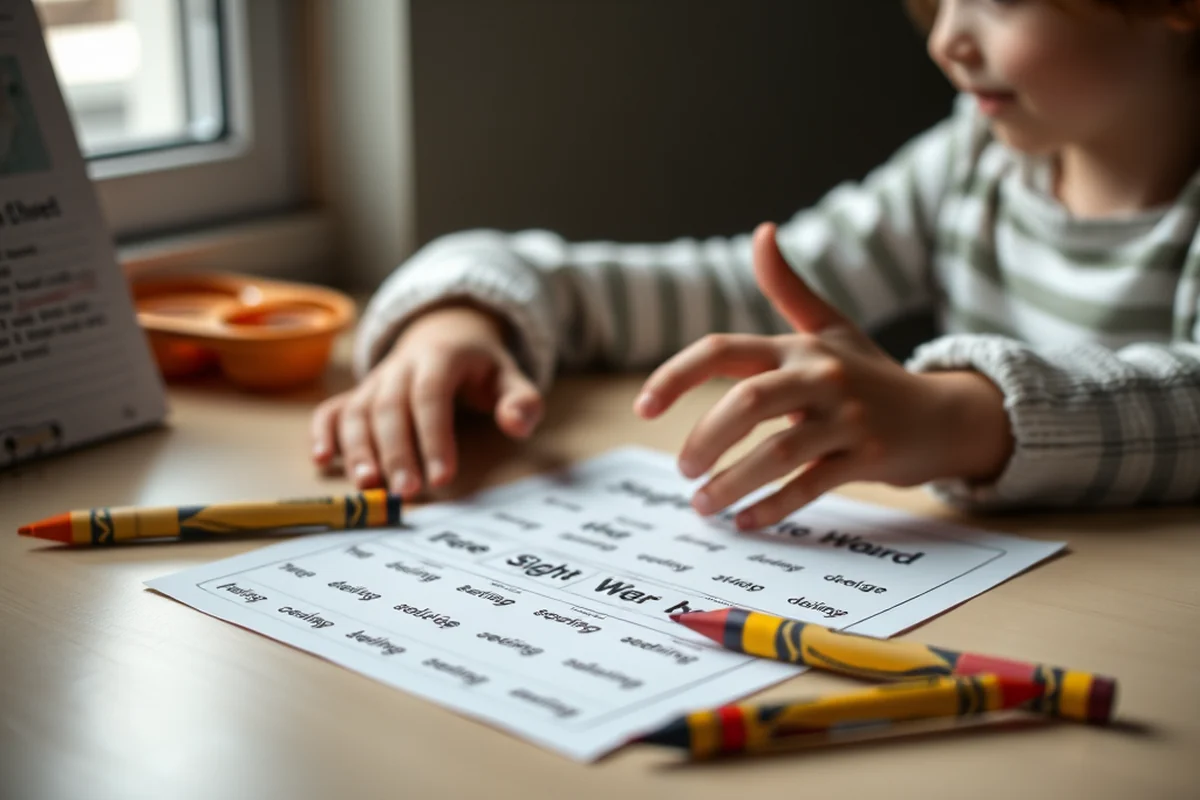
To begin, choose a sight word worksheet that matches your child's current reading level. If your child is just starting to learn to read, look for worksheets that focus on the most common sight words, such as 'the,' 'and,' and 'a.' Once you've chosen a worksheet, sit with your child and go through it together. This is a great opportunity to model how to read and identify the words.
As you work through the worksheet, encourage your child to read the words out loud and point to them as they say them. This active participation helps reinforce the learning process. It's also a good idea to take turns — let your child read a word, and then you read it back to them. This back-and-forth interaction helps build confidence and fluency.
Don't be afraid to repeat the words if your child needs more practice. Learning sight words takes time, and it's normal for a child to need multiple exposures before they can recognize a word on their own. The key is to be patient and consistent. Over time, you'll see your child becoming more confident and independent in their reading.
Consistency is key — even 10 minutes a day can make a big difference.
Related: Affordable kindergarten worksheets free printable
How to Make a Sight Words Worksheet More Engaging
One of the easiest ways to make a sight words worksheet more engaging is to add movement. For example, you can have your child hop on a spot for each word they read or use a toy to move across a path as they identify the words. This physical activity helps reinforce the learning process and keeps your child entertained.
Another way to make the worksheet more engaging is to incorporate games. You can use flashcards to play a quick matching game with the words on the worksheet, or you can create a scavenger hunt by hiding the words around the house and asking your child to find them. These games add an element of fun and challenge that can help keep your child's attention.
You can also use a timer to add a sense of urgency and make the activity more exciting. Challenge your child to see how many words they can identify in a minute, or set a goal of completing the worksheet in a certain amount of time. This kind of friendly competition can be a great motivator for young learners.
Adding a game element to the worksheet can make learning more fun and engaging. You can create a simple board game with the sight words as the spaces, or use a dice to move around the worksheet as you identify the words. This helps keep your child motivated and excited about learning.
“I remember the first time my son looked at a book and said, 'I know that word!' It was 'the' — one of the most…”— Kinderpractice editors
Related: Top addition worksheets for kindergarten
How to Track Progress with a Sight Words Worksheet
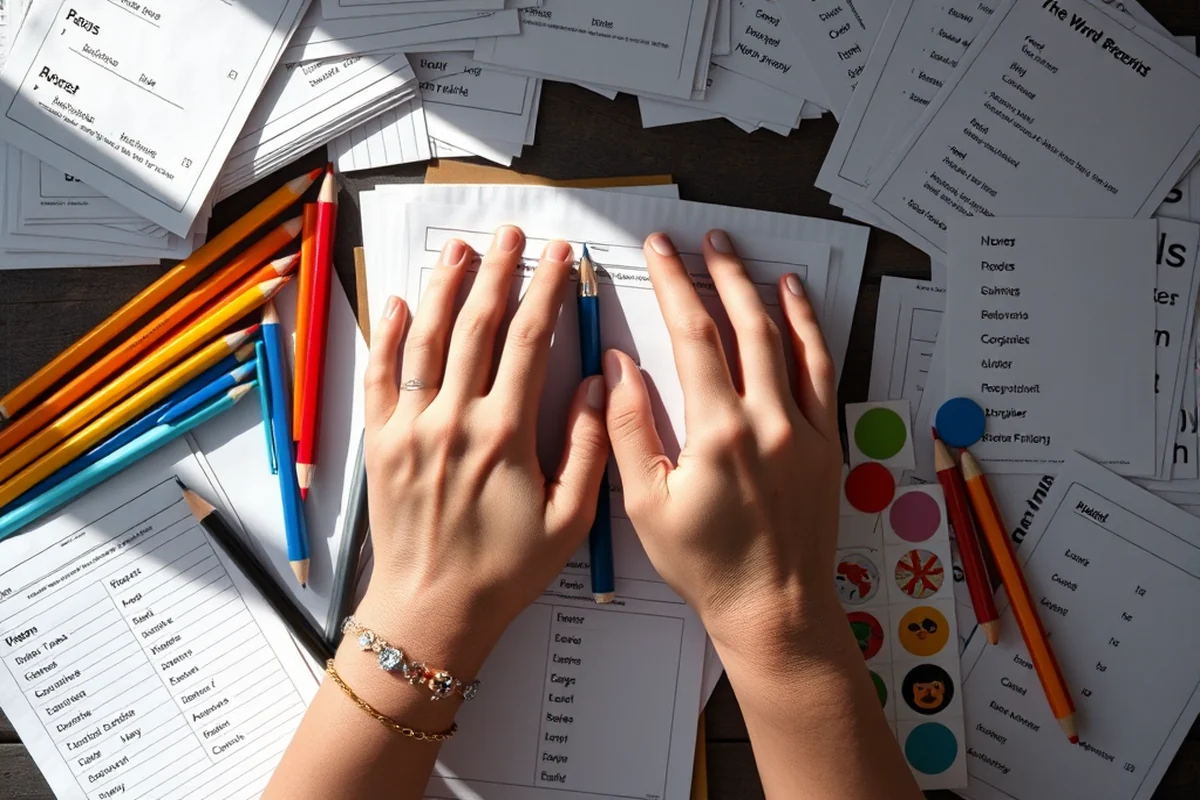
One of the simplest ways to track progress is to use a checklist. You can create a list of all the sight words your child is learning, and each time they master a word, you can check it off. This visual representation of progress can be very motivating for your child and can help you stay organized.
You can also use a worksheet to track how quickly your child can identify the words. For example, you can time your child as they go through the worksheet and record how long it takes them to complete it. Over time, you'll notice improvements in their speed and accuracy, which is a great indicator of progress.
Another way to track progress is to use a worksheet as a quiz. Once your child has practiced a set of words, you can use a different worksheet to test their knowledge. This helps you see if they've retained the words and if they're ready to move on to the next set. It's also a good way to identify any words that may need more practice.
Related: Kindergarten addition worksheets step by step
Why Sight Words Are Important for Early Literacy
Sight words are the building blocks of reading. They make up a large portion of the words in children's books, and they're essential for reading fluently. When a child can recognize sight words instantly, they can focus more on understanding the meaning of the text rather than decoding each word.
In my experience, teaching my son to recognize sight words has made a noticeable difference in his reading ability. He used to stumble over the same words repeatedly, but once he started recognizing them quickly, his reading became smoother and more confident. This is a common experience for many children, and it's a key reason why sight words are so important.
Research shows that children who can recognize sight words early on tend to perform better in school and have a stronger foundation for reading. By mastering these words, children can read more complex texts with greater ease and confidence. This is why sight words are a fundamental part of early literacy education.[3]
Related: Kindergarten worksheets for small spaces
How to Create Your Own Sight Words Worksheet
To create a sight words worksheet, start by selecting the words you want to include. You can choose the most common sight words, such as 'the,' 'and,' and 'a,' or you can focus on words that your child is currently struggling with. Once you've chosen the words, you can create a worksheet with different activities, such as tracing, matching, and circling.
You can also add visual aids to your worksheet to help your child make connections between the words and their meanings. For example, you can include pictures next to each word, or you can use different colors to highlight the words. This kind of customization can make learning more engaging and effective.
Creating your own worksheet also allows you to adjust the difficulty level based on your child's progress. If your child is mastering the words quickly, you can move on to more challenging words and activities. If they're struggling, you can go back to simpler words and focus on repetition and reinforcement.
Customizing the worksheet can make a huge difference in your child's learning experience.
Related: Cheap kindergarten worksheets
How to Use a Sight Words Worksheet with a Group of Children
One of the best ways to use a sight words worksheet with a group is to create a team activity. For example, you can divide the children into small groups and give each group a worksheet. The group can work together to identify the words and complete the activities. This kind of teamwork helps build social skills and reinforces the learning process.
You can also use the worksheet as a competition. For example, you can time each group as they complete the worksheet, and the group that finishes first gets a small prize. This adds an element of fun and motivation, and it encourages the children to work faster and more carefully.
Another way to use the worksheet with a group is to create a classroom display. You can have the children complete the worksheet and then hang their work on the wall. This not only gives the children a sense of accomplishment, but it also allows them to see the progress they've made and the work of their classmates.
👶 For Younger Kids
This variation is designed for preschoolers and includes large, colorful letters and simple activities like tracing and matching.
👦 For Older Kids
This version is ideal for children aged 6 and up, and includes more advanced activities like sentence building and context clues.
📄 No-Prep Version
This version is perfect for parents who want a ready-to-use worksheet that requires no preparation or printing.
👥 Group Version
This version includes activities that are designed for group learning, such as team challenges and collaborative tasks.
📚 Extension Version
This version includes extension activities like reading comprehension questions and word-building exercises.
| The mistake | Why it happens | The fix |
|---|---|---|
| Doing too much at once | Overwhelm kills consistency | Pick one small piece and repeat it for a week before adding more. |
| Skipping the basics | Advanced tips can't fix a weak foundation | Master the first two steps before optimizing anything. |
The Sight Words Worksheet
Common Questions
How long should I spend on a sight words worksheet each day?
Can I use a sight words worksheet with a child who is just learning to read?
How can I make a sight words worksheet more engaging for my child?
How can I track my child's progress with a sight words worksheet?
References
- 3rd Grade - Clinton Central School District (ccs.edu)
- Sight Word Worksheets and Test Strips (center.edu)
- Cloze Procedure Syllabus - ScholarWorks@CWU (digitalcommons.cwu.edu)
- English Language Arts and Literacy (doe.mass.edu)
Cite this guide
Kinderpractice (2026). The Sight Words Worksheet. https://kinderpractice.com/the-sight-words-worksheet/
Feel free to cite or share this guide.