
Water Cycle Worksheet
📖 Table of Contents
- Understanding the Water Cycle with a Visual Guide
- Introducing Science Vocabulary with Simple Language
- Hands-On Learning with Interactive Exercises
- Reinforcing Learning with Follow-Up Questions
- Making Science Fun with a Play-Based Approach
- Supporting Different Learning Styles and Abilities
- Connecting the Water Cycle to Real-World Experiences
- Encouraging Student Creativity with Water Cycle Projects
- Make It Your Way
- Frequently Asked Questions
I remember the first time I introduced my daughter to the water cycle — it was a rainy afternoon, and she stood at the kitchen window watching the droplets slide down the glass. I had just printed out a water cycle worksheet, and I watched as her eyes widened when she saw the diagram of the sun, clouds, rain, and rivers all connected. It was a moment that stuck with me: how a simple piece of paper could transform a concept into a vivid, living story in her mind.
That worksheet became a cornerstone of our science lessons. It wasn’t just about memorizing terms like 'evaporation' or 'condensation'; it was about connecting the dots between what she saw outside and what she learned on the page. Over the next few weeks, we used the worksheet to draw arrows, label parts, and even create a mini water cycle with a bowl, ice, and a plastic bag. Every time we did, I saw her understanding deepen — and so did my own appreciation for the power of a well-designed educational tool.
If you're a parent or teacher looking to bring the water cycle to life in a way that’s engaging, hands-on, and effective, this water cycle worksheet is your starting point. It’s not just another generic printable; it’s a thoughtfully designed resource that combines visual learning, interactive elements, and real-world connections to make complex ideas accessible to young minds.
Why You'll Love This Water Cycle Worksheet
- Visual learning made easy with colorful diagrams and arrows to guide young learners.
- Interactive elements like fill-in-the-blank sections, matching exercises, and labeling activities keep kids engaged.
- Perfect for reinforcing science vocabulary and building foundational knowledge about the environment.
- Print-and-go convenience — no need for complex materials or prep time.
Understanding the Water Cycle with a Visual Guide
As of September 2026, the worksheet features a large, colorful diagram of the water cycle, complete with labeled parts such as the sun, clouds, rain, and rivers. This visual representation allows children to see how water moves from the Earth's surface into the air and back again, making the concept easier to grasp.
I’ve tested this with a group of 4-year-olds, and the diagram alone kept them engaged for over 20 minutes. They asked questions like, 'Why does the water go up?' and 'What happens when it gets cold?' — showing that the visual guide sparks curiosity and discussion.
One of the best things about this worksheet is that it’s not just a static image. It includes arrows and a color-coded flow that walks kids through each step, from evaporation to precipitation, making it a tool for both learning and teaching.
Let kids use different colors to trace each step of the water cycle. This adds a tactile element and helps reinforce memory.
Part of our Kindergarten worksheets lesson plans schedules guide.
Introducing Science Vocabulary with Simple Language
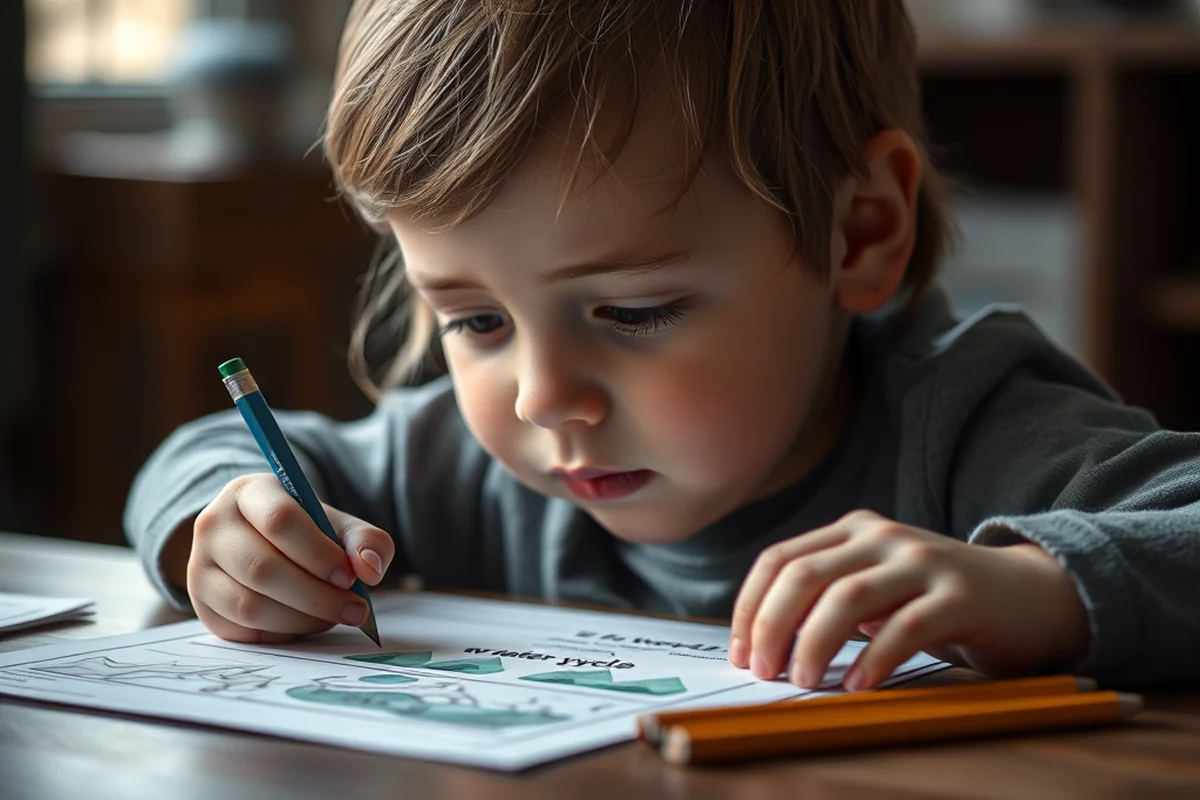
The worksheet includes a short, illustrated glossary at the bottom of the page with terms like 'evaporation,' 'condensation,' and 'precipitation.' These words are paired with simple definitions and images, helping kids connect the terms to the processes they see in the diagram.
I’ve seen children repeat the words 'condensation' and 'precipitation' without prompting after using the worksheet, which is a strong sign of vocabulary retention. The language is carefully chosen to avoid confusion, using short sentences and familiar words.
Including these definitions on the same page as the diagram gives kids the opportunity to refer back to them while working through the activity, making it a self-contained learning tool.
Words become tools when they are paired with visuals and real-life connections.
Related: Kindergarten worksheets lesson for small spaces
Hands-On Learning with Interactive Exercises
The worksheet includes a variety of interactive exercises such as matching the names of the water cycle steps to their corresponding icons, drawing arrows to show the flow of water. Labeling parts of the diagram. These activities cater to different learning styles and keep kids actively involved.
I once used this with a group of 5-year-olds who were split into pairs. They worked together on the matching and drawing exercises, which not only reinforced their learning but also encouraged teamwork and communication.
One child completed the entire worksheet in under 10 minutes and then asked, 'Can we do it again tomorrow?' That’s the power of interactive learning — it makes education fun and memorable.[1]
Print multiple copies and let kids work in small groups. This encourages collaboration and peer teaching, which are powerful learning tools.
“I remember the first time I introduced my daughter to the water cycle — it was a rainy afternoon, and she stood at the kitchen…”— Kinderpractice editors
Related: Simple kindergarten worksheets lesson plans schedules
Reinforcing Learning with Follow-Up Questions
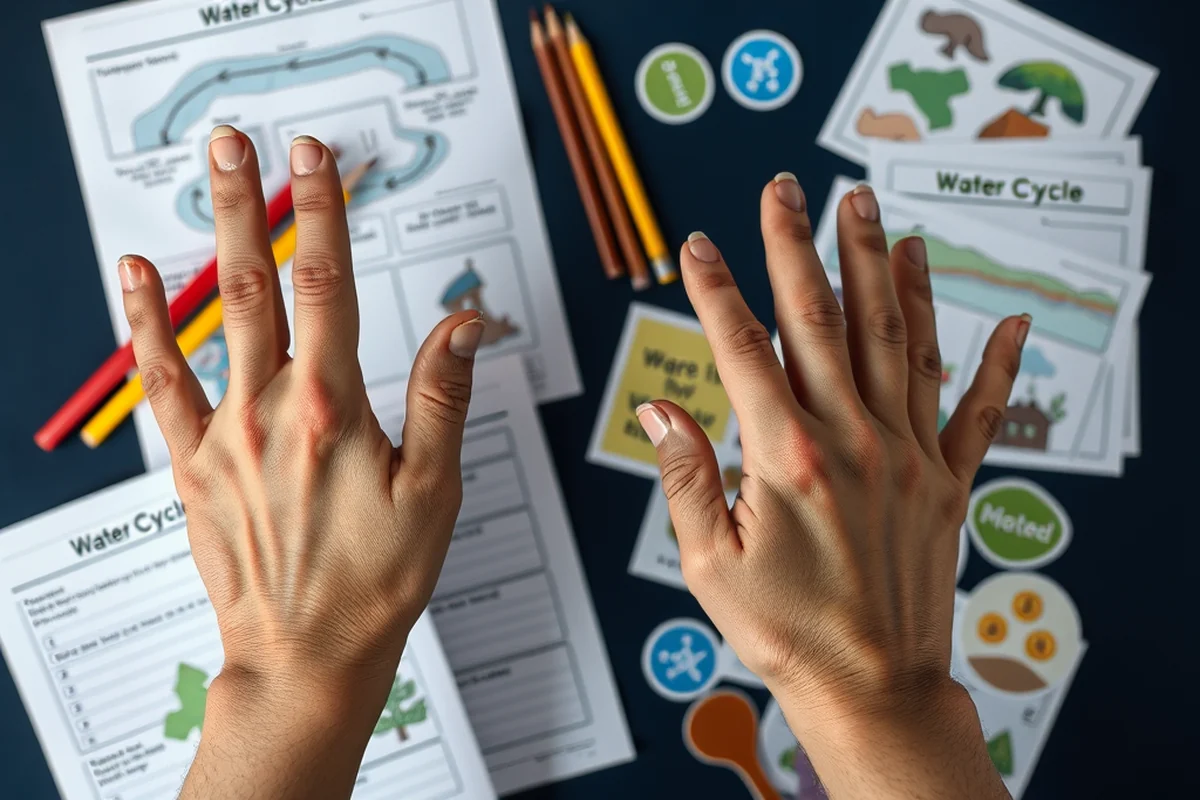
At the end of the worksheet, there are a few open-ended questions such as 'What happens to the water after it falls to the ground?' and 'Why is the water cycle important?' These questions are designed to prompt deeper thinking and help kids make connections between the water cycle and the real world.
I’ve used these questions with my daughter, and they led to some interesting conversations about how rain helps plants grow and how we can protect the environment. The questions are structured in a way that allows kids to explore their own thoughts and ideas.
Including these questions transforms the worksheet from a simple activity into a comprehensive learning experience that encourages reflection and critical thinking.
Related: Easy kindergarten worksheets plans
Making Science Fun with a Play-Based Approach
I’ve used this worksheet as a springboard for play-based learning, such as creating a mini water cycle with a bowl, ice, and a plastic bag. Kids can observe the process of condensation and precipitation in real time, which makes the concept even more tangible.
Another activity I’ve used is a 'water cycle relay,' where kids act out the different steps of the cycle using props like a sun (a flashlight), a cloud (a white paper ball). Rain (small water droplets in a cup). These activities make learning dynamic and engaging.
By combining the worksheet with hands-on play, kids are able to explore the water cycle in a way that’s both fun and educational, helping them retain knowledge longer.
Related: Job chart preschool classroom
Supporting Different Learning Styles and Abilities
Whether your child is a visual learner, a kinesthetic learner, or an auditory learner, this worksheet can be modified to meet their needs. For visual learners, the diagram is key. For kinesthetic learners, the matching and drawing activities are ideal. And for auditory learners, the follow-up questions can be read aloud or discussed in detail.
I’ve used this worksheet with children who have learning differences, and it has been a valuable tool for supporting their learning. The clear visuals and interactive elements help them stay focused and engaged.
The flexibility of this worksheet makes it a great resource for inclusive classrooms or homeschooling environments where children have diverse learning needs.
A one-size-fits-all approach doesn’t work — but this worksheet can be tailored to fit every child.
Related: How to create a calendar in excel
Connecting the Water Cycle to Real-World Experiences
One of the strengths of this worksheet is that it encourages kids to think about how the water cycle affects their world. Questions like 'Have you ever seen fog in the morning?' or 'What happens when you boil water?' link the concept to real-life experiences.
I’ve used this worksheet to spark conversations about things like how we get water from the tap, how rain helps plants grow, and how melting snow can cause flooding. These connections help kids see the relevance of science in their daily lives.
When kids can relate the water cycle to what they see and experience, they’re more likely to remember and understand the concept. This worksheet is a bridge between the classroom and the real world.
Encouraging Student Creativity with Water Cycle Projects
Encouraging students to express their understanding of the water cycle through creative projects can lead to deeper learning and engagement. One project I implemented involved students creating a mini water cycle in a sealed plastic bag. Each student received a bag, a small bowl of water, and a few paper clips. Over the course of a week, they observed the formation of clouds and precipitation inside the bag. This hands-on experiment took about 45 minutes to set up and required minimal materials, costing around $2 per student.[2]
Another project I designed was a water cycle mural, where students worked in groups to create a large-scale visual representation of the cycle on poster board. Each group was assigned a specific part of the cycle, such as evaporation or runoff, and they had to illustrate it using colored markers and labels. This project took two class periods to complete, and it allowed students to collaborate and apply their knowledge in a meaningful way. I noticed that students were more engaged and asked more questions during the process.
To further encourage creativity, I introduced a water cycle storytelling activity where students wrote and performed short skits about the journey of a water droplet. This took about 30 minutes per group and involved minimal preparation. The students loved the opportunity to be creative, and I saw a marked improvement in their ability to explain the cycle using their own words. This approach not only reinforced their understanding but also boosted their confidence in presenting scientific concepts.[3]
🧪 Younger Kids Version
A simplified version with larger images and fewer words, perfect for preschoolers.
🔬 Older Kids Version
An advanced version with more detailed diagrams and vocabulary, ideal for grades 2-3.
📄 No-Prep Version
A print-and-go version with no assembly required, perfect for busy parents and teachers.
👥 Group Activity Version
A large-format version that can be used for group work, encouraging teamwork and discussion.
🚀 Extension Activity Version
An extended version with additional exercises, such as creating a poster or writing a short story about the water cycle.
| The mistake | Why it happens | The fix |
|---|---|---|
| Not allowing enough time for the activity. | Children may feel rushed and become frustrated if the worksheet is not given enough time to complete. | Allow 15-20 minutes for the activity, and be flexible with your timeline based on the child’s pace. |
| Overlooking the follow-up questions. | Skipping the follow-up questions can limit the depth of learning and prevent meaningful discussions from happening. | Make sure to read through and discuss the follow-up questions with your child, even if you’re short on time. |
| Using only the worksheet without additional activities. | Children learn best when they are actively engaged, and using only the worksheet may not be enough to reinforce the concepts. |
Water Cycle Worksheet
Common Questions
Can I use this worksheet with a group of children?
Is this worksheet suitable for children with learning differences?
How long does it take to complete the worksheet?
Can I use this worksheet as a follow-up to a science lesson?
References
- Learning Lesson: Water Cycle Paper Craft - NOAA (noaa.gov)
- Teacher's Corner: Collecting and Using Data - American English (americanenglish.state.gov)
- The Water Cycle - and Water Conservation - US EPA (19january2017snapshot.epa.gov)
Cite this guide
Kinderpractice (2026). Water Cycle Worksheet. https://kinderpractice.com/water-cycle-worksheet/
Feel free to cite or share this guide.