
What Is A Time Sheet
📖 Table of Contents
A few years ago, I found myself trying to track how much time my students spent on different activities in my classroom — and I was completely lost. I had no system, no structure, and no idea how to even begin. That was until I stumbled upon the concept of a time sheet, which instantly transformed the way I managed my classroom. A time sheet is more than just a piece of paper; it’s a powerful tool that helps educators and students alike stay on top of time management, accountability, and productivity.
What struck me about time sheets was how simple they are to use, yet how impactful they can be. I remember the first time I used one with my students; I had them track how long they spent on a math activity, a reading task, and a science experiment. By the end of the day, I had a clear picture of where my students were spending their time — and it helped me make better decisions about how to allocate class time moving forward. Time sheets are not only useful for teachers; they can be incredibly beneficial for students as they learn to manage their own schedules and responsibilities.
Since incorporating time sheets into my classroom routine, I've noticed a significant shift in how my students approach their work. They're more focused, more organized, and more aware of how they're using their time. I’ve even started using time sheets at home to help my kids with their homework, and it’s been a game-changer. Whether you're a teacher, a parent, or a student, a time sheet can be a simple yet effective way to stay on top of your time and responsibilities.
Why You'll Love This Time-Tracking System
- Helps students develop essential time management skills
- Provides teachers with actionable data on student productivity
- Promotes accountability and responsibility in the classroom
- Easy to implement and customize for different grade levels
What Exactly Is a Time Sheet?
As of September 2026, a time sheet is a structured way for individuals or groups to track how much time is spent on various tasks or activities. In an educational setting, it can be used to monitor how students allocate their time during class, homework, or even extracurricular activities. Time sheets can be as simple as a paper with columns for activity names, start times, and end times, or they can be digital tools with more advanced tracking features.[1]
I often use a paper-based time sheet in my classroom for younger students because it's easy to understand and manage. I’ve created a basic version with three columns: 'Activity,' 'Start Time,' and 'End Time.' When my students complete an activity, they write down the name of the task and the time it started and ended. This simple system allows me to see how long each activity took and whether we’re staying on schedule.[2]
Using a time sheet has helped me identify which activities take longer than expected and which ones are completed more quickly. This has allowed me to adjust my lesson plans to better manage classroom time and ensure that we’re making the most of every minute.
For younger students, use a paper-based time sheet with three columns: 'Activity,' 'Start Time,' and 'End Time.' This helps them learn the basics of time tracking in a straightforward way.
Part of our Kindergarten worksheets lesson plans schedules guide.
How Time Sheets Benefit Students
One of the most significant benefits of using time sheets is that they teach students how to manage their time effectively. When students are asked to track how long they spend on different tasks, they become more aware of how they’re using their time. This awareness can lead to more focused learning and better time management skills that carry over into other areas of their lives.
I’ve noticed that students who use time sheets regularly tend to be more organized and less likely to procrastinate. They also become more efficient with their homework and classroom work, which is a win for both their academic performance and their stress levels. Time sheets help students see the connection between the time they invest in an activity and the results they achieve.
Another benefit is that time sheets help students take ownership of their responsibilities. When students track their own time, they become more accountable for their actions and progress. This sense of responsibility can be especially valuable for younger students who are still learning how to manage their time and stay on task.
Time sheets help students take ownership of their responsibilities.
Related: Diy kindergarten worksheets lesson
How Time Sheets Benefit Educators
For educators, time sheets provide a wealth of data that can be used to improve classroom management and student performance. By reviewing the time sheets used by their students, teachers can identify patterns, spot areas for improvement, and make more informed decisions about how to allocate time in the classroom.
I’ve used time sheets to analyze how long my students spend on different subjects and activities. From this data, I’ve been able to adjust the structure of my lessons to ensure that we’re covering all necessary topics without leaving students overwhelmed or under-challenged. Time sheets also help me see which activities are most effective in terms of student engagement and learning outcomes.
Another benefit of using time sheets is that they allow teachers to track student progress over time. By comparing time sheets from different weeks or months, teachers can see if students are improving in their time management skills or if they need additional support. This data can also be shared with parents to help them understand how their children are spending their time in the classroom.
Review time sheets regularly to identify patterns in student behavior and adjust your lesson plans accordingly. This can help you create a more effective and efficient classroom environment.
“A few years ago, I found myself trying to track how much time my students spent on different activities in my classroom — and I…”— Kinderpractice editors
Related: Kindergarten worksheets plans for beginners
How to Create a Time Sheet
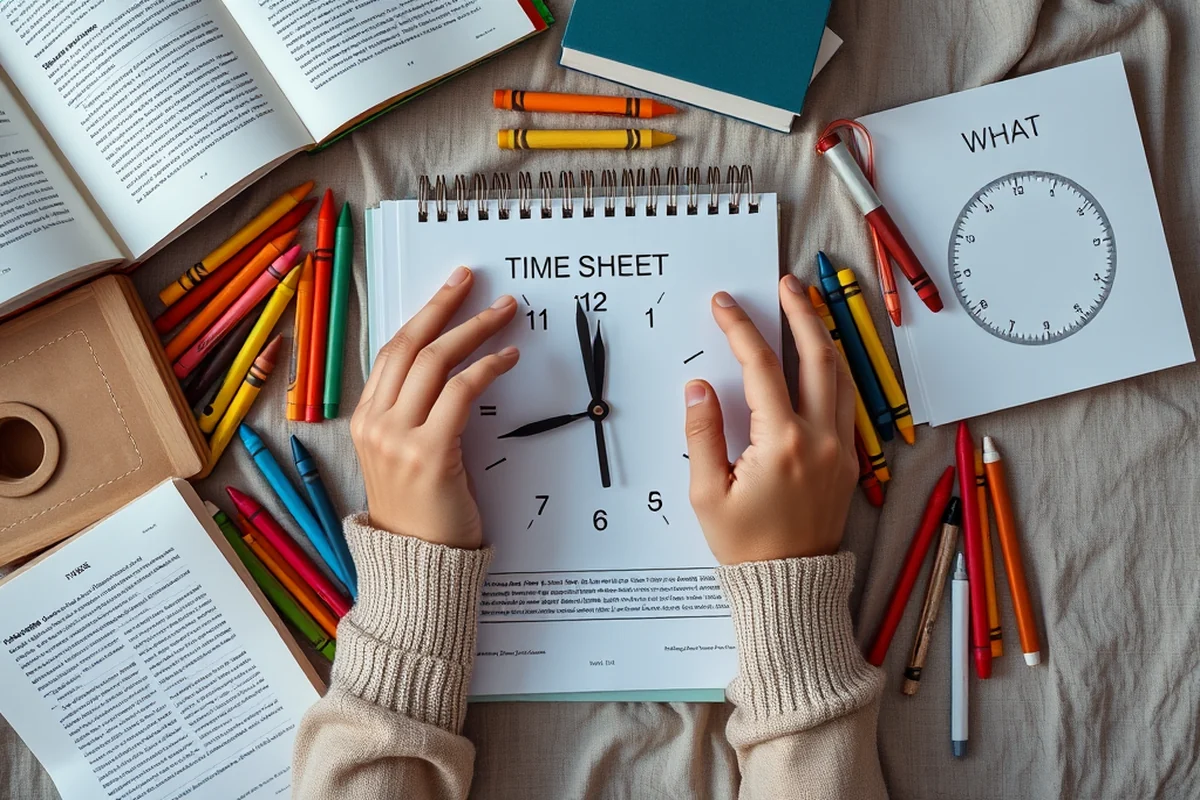
Creating a time sheet is straightforward and doesn’t require any special tools or software. You can start by designing a basic template that includes columns for activity names, start times, and end times. For younger students, it’s best to use a simple format with large, clear fonts and enough space for students to write their answers.
I created a time sheet template for my classroom that included three columns: 'Activity,' 'Start Time,' and 'End Time.' I printed these out and had my students use them during different parts of the day. For example, if we were doing a math activity, I would have the students write down the name of the activity and the time it started and ended. This helped me track how long each activity was taking and ensured that we were staying on schedule.
Over time, I’ve experimented with different formats for my time sheets. Some weeks, I’ve used digital time sheets on a shared spreadsheet, while other weeks I’ve used paper-based ones. The key is to find a format that works best for your classroom and students. Once you have the right format, the rest is just a matter of encouraging students to use it consistently.
Related: Budget kindergarten worksheets plans
How to Use a Time Sheet in the Classroom
Once a time sheet is created, the next step is to use it consistently in the classroom. I usually start by introducing the time sheet to my students and explaining why it’s important. I make sure they understand that the time sheet is a tool that helps them stay on track and manage their time more effectively.
During class, I encourage my students to use the time sheet as they complete different activities. For example, if we’re working on a group project, I’ll have the students write down the name of the task and the time it started and ended. This helps them stay focused and ensures that we’re making the most of our time.
I’ve also found that using a time sheet in the classroom helps students become more responsible with their time. By tracking how long they spend on each activity, students learn to be more efficient and avoid wasting time on unimportant tasks. This is especially helpful for students who are still learning how to manage their time effectively.
Related: Kindergarten worksheets lesson for small spaces
How to Use a Time Sheet at Home
Time sheets aren’t just useful in the classroom — they can also be a valuable tool for students at home. I’ve started using time sheets with my children to help them manage their homework, chores, and extracurricular activities. This has helped them become more organized and efficient with their time.
To use a time sheet at home, I simply create a basic template with columns for activity names, start times, and end times. I print these out and have my children use them whenever they’re working on a task. For example, if my son is doing his homework, he’ll write down the name of the task and the time it started and ended. This helps him stay on track and make sure he’s completing his work in a timely manner.
Using a time sheet at home has been a great way to help my children develop strong time management skills. They’ve become more responsible with their time, and I’ve noticed that they’re completing their tasks more efficiently. This has been a win for both my children and me, as it’s helped us manage our time more effectively.
Time sheets help students become more responsible with their time.
Related: Simple kindergarten worksheets lesson plans schedules
How to Customize a Time Sheet
One of the best things about time sheets is that they can be customized to fit the needs of different classrooms and students. I’ve experimented with different formats over the years, including adding extra columns for notes or using digital tools for more advanced tracking.
For younger students, I’ve created time sheets with large fonts and clear instructions to make them easier to use. For older students, I’ve used digital time sheets on shared spreadsheets to allow for more detailed tracking and analysis. This flexibility has allowed me to create time sheets that work best for my students and classroom needs.
Customizing a time sheet can also help educators track different types of activities or monitor student progress over time. By adjusting the format and content of the time sheet, educators can create a tool that is both effective and engaging for their students.
🎒 Younger Kids Time Sheet
A simplified version with large fonts and picture-based columns to help younger students track time visually.
🎓 Older Kids Time Sheet
A more detailed version with columns for activity names, start time, end time, and notes for reflection.
📄 No-Prep Time Sheet
A ready-to-use template that can be printed and used immediately with no setup or customization needed.
👥 Group Time Sheet
A collaborative version that allows students to track time spent on group projects and shared tasks.
📈 Extension Time Sheet
An advanced version that includes tracking of time spent on different subjects and progress over multiple weeks.
| The mistake | Why it happens | The fix |
|---|---|---|
| Not using a consistent format for the time sheet. | If the time sheet format changes frequently, it can confuse students and make it harder for teachers to track time effectively. | Choose a clear and consistent format for the time sheet and use it regularly. This will help students understand how to use it and make it easier for teachers to analyze the data. |
| Failing to review time sheets regularly. | If teachers don’t review time sheets regularly, they may miss important patterns or areas where students need more support. | Make it a habit to review time sheets on a weekly or bi-weekly basis. This will help you identify trends and make informed decisions about how to adjust your teaching strategies. |
| Overloading the time sheet with too much information. | If the time sheet has too many columns or too much detail, it can become overwhelming for students and may discourage them from using it regularly. | Keep the time sheet simple and focused on the most important information. Start with just a few columns and add more as needed, based on student needs and classroom goals. |
| Not involving students in the process. | If students aren’t involved in creating or using the time sheet, they may not take it seriously or see the value in tracking their time. | Involve students in the process by letting them help create the time sheet or choose the format they prefer. This will increase their engagement and make them more likely to use it consistently. |
What Is A Time Sheet
Common Questions
Can time sheets be used for subjects other than school work?
How often should students use a time sheet?
Are time sheets only for students?
Can time sheets be used digitally?
References
- CIA - A Tradecraft Primer: Structured Analytic Techniques for ... (cia.gov)
- Knowing How to Fold 'em: Paper Folding across Early Childhood (pmc.ncbi.nlm.nih.gov)
Cite this guide
Kinderpractice (2026). What Is A Time Sheet. https://kinderpractice.com/what-is-a-time-sheet/
Feel free to cite or share this guide.