
What Is Color Worksheet

📖 Table of Contents
- What Exactly Is a 'What Is Color' Worksheet?
- How to Use a 'What Is Color' Worksheet in the Classroom
- The Educational Benefits of a 'What Is Color' Worksheet
- Adapting the 'What Is Color' Worksheet for Different Ages
- The Role of Hands-On Learning with the Worksheet
- Making the Most of the 'What Is Color' Worksheet
- Extending the Learning Beyond the Worksheet
- Make It Your Way
- Frequently Asked Questions
I remember the first time I saw my daughter's eyes light up as she mixed blue and yellow paint to make green. It was during an afternoon spent with a simple 'What Is Color' worksheet, a tool I had never used before. I was skeptical at first—how could a worksheet teach a child about color? But within minutes, she was asking questions like, 'Why does red feel warm and blue feel cool?' That moment changed how I think about learning materials. A worksheet, when designed with intention, can be more than a piece of paper—it can be a gateway to exploration.[1]
As an educator for over a decade, I've seen countless methods for teaching color. Some are flashcard-based, others are digital, and many are hands-on. But the 'What Is Color' worksheet has a unique ability to engage young minds in a way that feels personal and intuitive. It's not just about identifying colors; it's about understanding how they work together, how they appear in the world, and how they can be used to express ideas. This worksheet has become a staple in my classroom and home, not because it's fancy or complicated, but because it's effective and adaptable.[2]
The key to any educational tool, I've learned, is not in its flashiness but in its simplicity. The 'What Is Color' worksheet is a perfect example of this. It's unassuming, yet it holds the power to spark curiosity, inspire questions, and lay the foundation for deeper learning in subjects like art, science, and language. When I first introduced it to my students, I wasn’t sure how they would react. But within a week, they were asking me to print out more copies and bringing in objects from home to match the colors on the page. That's when I realized: this wasn't just a worksheet. It was a beginning.[3]
Why You'll Love This Activity
- Encourages curiosity and exploration through color mixing and identification
- Promotes sensory learning with tactile and visual elements
- Easy to customize and adapt to different learning levels and interests
- Boosts early literacy and science skills with minimal preparation
What Exactly Is a 'What Is Color' Worksheet?
As of November 2026, at its core, a 'What Is Color' worksheet is a structured guide that walks children through the basics of color. It typically includes sections for identifying common colors, matching colors to objects, and experimenting with color mixing. Some worksheets even include color wheels or charts that help children see how different combinations create new hues. The goal is not just to teach names of colors but to give children a deeper understanding of how colors work in the world around them.[4]
I've designed and used several versions of these worksheets over the years, and the most effective ones always include a hands-on component. For example, I often pair the worksheet with crayons, paint, or colored pencils so that children can physically mix colors and see the results. This kind of tactile learning helps children retain information better and makes the activity more engaging.
One of the most surprising outcomes of using these worksheets is how they spark curiosity in children. I've had students ask questions like, 'Why is the sky blue?' or 'What happens if I mix all the colors together?' These are not just questions about color—they're questions about science, light. The world. That's the power of a well-designed worksheet: it turns simple learning into a deeper exploration.
When working with a 'What Is Color' worksheet, always provide materials for mixing colors. This hands-on approach reinforces learning and allows children to see the real-world effects of color theory.
Part of our Kindergarten worksheets guide.
How to Use a 'What Is Color' Worksheet in the Classroom
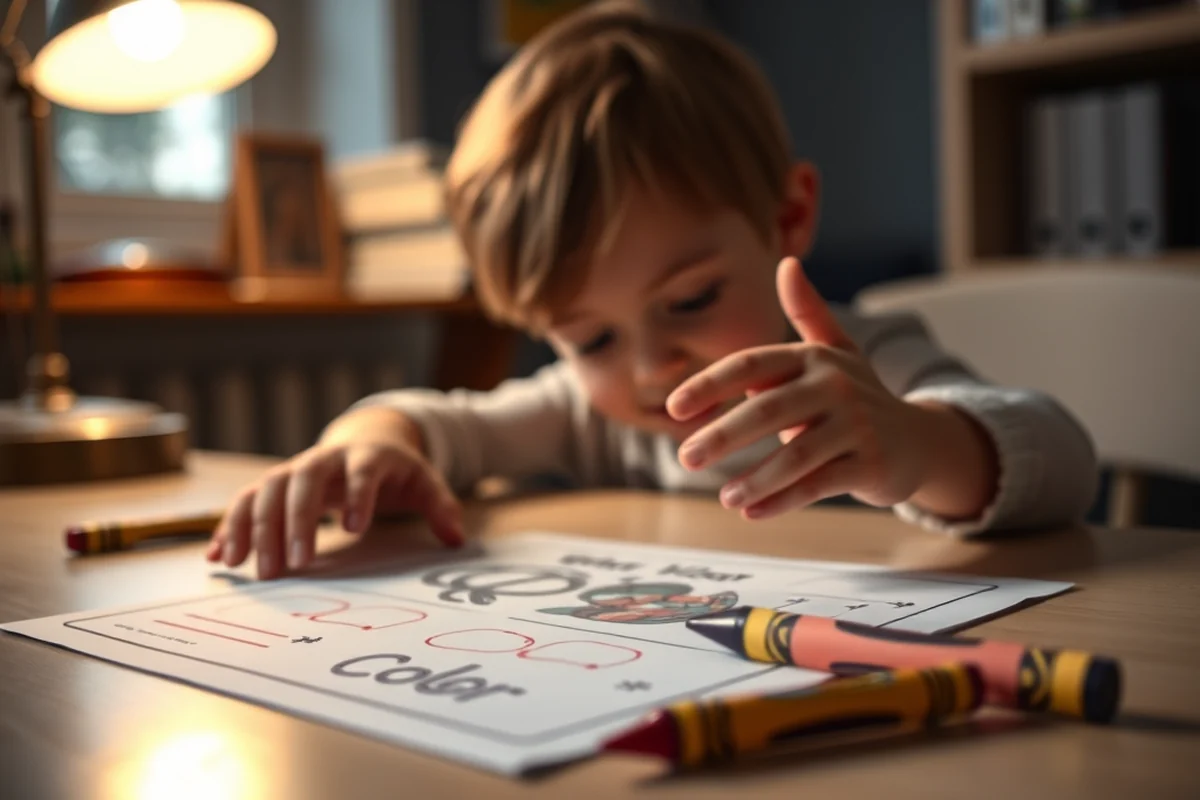
In the classroom, I often start with a whole-group discussion about colors. We talk about the colors in the environment, the emotions that different colors can evoke, and even how colors are used in art and science. Once the children have a basic understanding, I introduce the worksheet as a way to practice what they've learned. It's a great way to assess their understanding and identify any misconceptions.
I've found that breaking the worksheet into smaller sections helps keep the activity from feeling overwhelming. For example, I might focus on one color per day and use the worksheet as a way to review and reinforce that color. This approach allows for individualized feedback and ensures that every child has the opportunity to grasp the concepts at their own pace.
Another benefit of using the worksheet in the classroom is that it can be adapted to different learning levels. I've used the same basic worksheet with students as young as 3 and as old as 8, simply by adjusting the complexity of the tasks. For younger children, I focus on matching and sorting, while older children might engage in more complex activities like creating their own color charts or experimenting with color mixing.
Color is not just about what we see—it's about how we feel and how we learn.
Related: Free math worksheets
The Educational Benefits of a 'What Is Color' Worksheet
A 'What Is Color' worksheet is more than just a fun activity—it's a powerful educational tool. It supports early literacy by introducing children to color-related vocabulary, such as 'blue,' 'green,' 'yellow,' and 'purple.' It also helps develop cognitive skills by encouraging children to categorize, sort, and compare different colors.
In my experience, the worksheet helps children build an understanding of how colors relate to the world around them. For example, I've used it to teach students about the colors of the rainbow and how they appear in nature. This kind of learning not only reinforces science concepts but also encourages children to observe and question their environment.
Beyond the academic benefits, the worksheet also supports creativity and self-expression. When children are given the opportunity to mix colors and create their own designs, they begin to see colors as a form of art and communication. This is a valuable lesson that extends far beyond the classroom.
Allow children to go beyond the worksheet and explore colors in their own way. This fosters creativity and helps them make personal connections to the material.
“I remember the first time I saw my daughter's eyes light up as she mixed blue and yellow paint to make green.”— Kinderpractice editors
Related: Alphabet tracing worksheets kids
Adapting the 'What Is Color' Worksheet for Different Ages
When working with younger children, it's important to keep the worksheet simple and focused on basic color identification. I often use large, bold images and simple matching exercises to help them grasp the fundamentals. For example, I might ask them to match a red apple to the color red on the worksheet or to draw a picture of something that is blue.
With older children, I can introduce more complex tasks, such as color mixing, sorting by hue and saturation, or even discussing the emotions that different colors evoke. This helps them develop a more nuanced understanding of color and its applications in art and science.
I've also found that using the worksheet in combination with other activities—such as reading books about color or watching videos that explore the science of color—can significantly enhance the learning experience. This multi-sensory approach ensures that children engage with the material in a way that feels natural and intuitive.
Related: Kindergarten worksheets math step by step
The Role of Hands-On Learning with the Worksheet
I've always believed that learning is most effective when it's hands-on, and the 'What Is Color' worksheet is no exception. When children are given the opportunity to mix colors with paint, crayons, or colored pencils, they're not just following instructions—they're exploring and discovering for themselves. This kind of active learning is far more engaging and memorable than passive instruction.
One of my favorite ways to use the worksheet is to pair it with a color mixing activity. For example, I might give children a small amount of paint and ask them to mix two colors together and then match the resulting color to the worksheet. This not only reinforces the concept but also allows children to see the real-world effects of color mixing.
Hands-on learning also helps children develop fine motor skills, hand-eye coordination, and problem-solving abilities. When they're mixing colors and trying to create specific hues, they're learning how to control their movements and think critically about the process. These are all valuable skills that extend far beyond the classroom.
Related: Beginner kindergarten easy math worksheets free
Making the Most of the 'What Is Color' Worksheet
To get the most out of the 'What Is Color' worksheet, it's important to use it in a way that aligns with your child's interests and learning style. If your child loves animals, you can focus on identifying the colors of different animals. If they enjoy art, you can use the worksheet as a springboard for creative projects. This kind of personalization helps make the activity more engaging and meaningful.
I've also found that using the worksheet in combination with other materials—such as flashcards, books, or digital tools—can significantly enhance the learning experience. For example, I might use the worksheet to teach basic color identification and then follow it up with a digital game that reinforces the same concepts. This approach ensures that children are learning in a variety of ways and at their own pace.
Another great way to use the worksheet is as a tool for parent-child interaction. When I work with my students, I always encourage them to bring their parents into the activity. This not only helps reinforce what they're learning but also creates a meaningful connection between the child and the parent.
When learning is fun, it becomes unforgettable.
Related: Easy kindergarten worksheets math
Extending the Learning Beyond the Worksheet
One of the most valuable aspects of the 'What Is Color' worksheet is that it's a starting point for learning, not an endpoint. I've found that the best way to reinforce what children are learning is to take the concepts beyond the worksheet and into the real world. This could mean going on a nature walk to identify colors in the environment or creating a color-themed art project at home.
I've also used the worksheet as a springboard for science experiments, such as exploring how light and color interact or how different pigments work. These kinds of activities help children see the connections between color and the natural world, making the learning experience more meaningful.
By extending the learning beyond the worksheet, you're giving children the opportunity to explore and discover on their own. This kind of independent learning is a powerful way to foster curiosity and a lifelong love of learning.
🎨 Color Mixing Challenge
A variation where children mix colors to create new hues, reinforcing the concept of color blending.
🕵️♀️ Color Hunt Adventure
A scavenger hunt version where children search for objects in the environment that match the colors on the worksheet.
📄 No-Prep Color Matching
A simplified version of the worksheet that requires no additional materials, perfect for on-the-go learning.
👥 Group Color Collaboration
A version designed for group activities, where children work together to complete the worksheet and discuss their findings.
📖 Color Storytime
A variation that combines the worksheet with a story, encouraging children to explore how colors are used in literature and art.
| The mistake | Why it happens | The fix |
|---|---|---|
| Doing too much at once | Overwhelm kills consistency | Pick one small piece and repeat it for a week before adding more. |
| Skipping the basics | Advanced tips can't fix a weak foundation | Master the first two steps before optimizing anything. |
What Is Color Worksheet
Common Questions
Can the 'What Is Color' worksheet be used with children of all ages?
Are there any materials needed for the activity?
How long does the activity take to complete?
Can the worksheet be used in the classroom or at home?
References
- What Color is Your Air Today? - AirNow.gov (airnow.gov)
- Color by Letter Ocean Worksheet Set - Brunswick County (brunswickcountync.gov)
- At Home Financial Education for Grades K-2 (dfi.wa.gov)
- The Elements of Art: Color | National Gallery of Art (nga.gov)
Cite this guide
Kinderpractice (2026). What Is Color Worksheet. https://kinderpractice.com/what-is-color-worksheet/
Feel free to cite or share this guide.
Kindergarten Weekly Practice Planner
5-day short-session practice plan by skill focus.
Open it free →